

Hey there! I'm a supplier in the Thin Laminated Slab Pouring Production business. Over the years, I've faced my fair share of technological bottlenecks in this field. In this blog, I'm gonna share some thoughts on how to break through these challenges.
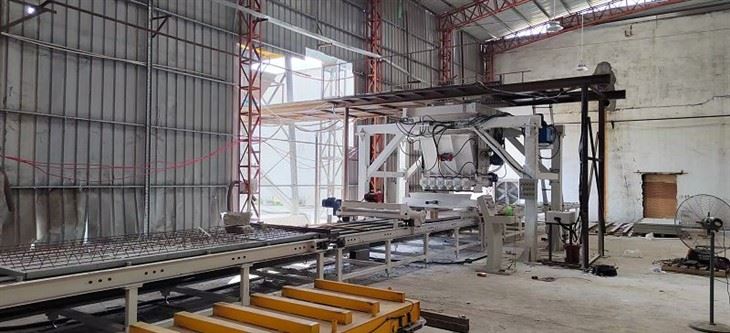

First off, let's talk about what these bottlenecks actually are. In Thin Laminated Slab Pouring Production, we often run into issues like inconsistent slab thickness, poor surface finish, and low production efficiency. These problems can really hold us back from delivering high - quality products to our customers.
One of the main reasons for inconsistent slab thickness is the uneven distribution of the pouring material. To tackle this, we need to invest in advanced pouring equipment. For example, using a computer - controlled pouring system can ensure a more precise and even flow of the material. These systems can adjust the pouring speed and volume in real - time based on the specific requirements of each slab. You can learn more about Thin Laminated Slab Pouring Production on our website, where we've got detailed information about the latest technologies and equipment in this area.
Another major bottleneck is the poor surface finish of the slabs. This can be caused by factors such as air bubbles trapped in the material during pouring, or improper curing conditions. To get rid of air bubbles, we can use vibration techniques. By vibrating the mold during the pouring process, we can make the air bubbles rise to the surface and escape. As for curing, we need to control the temperature and humidity carefully. Using a curing chamber with precise environmental controls can help us achieve a better surface finish.
When it comes to low production efficiency, automation is the key. We can automate many of the processes in thin laminated slab pouring, such as mold preparation, material feeding, and slab removal. This not only speeds up the production process but also reduces the risk of human error. For instance, an automated conveyor system can move the molds from one station to another smoothly, saving a lot of time and labor.
We also need to focus on research and development. By collaborating with universities and research institutions, we can stay on top of the latest technological advancements. They can provide us with new materials and innovative production methods. For example, some new types of concrete additives can improve the strength and durability of the slabs, while also making the pouring process easier.
In addition, we should pay attention to the quality control system. A comprehensive quality control system can help us detect and correct problems early in the production process. We can use non - destructive testing methods, such as ultrasonic testing, to check the internal structure of the slabs. This way, we can ensure that only high - quality products leave our factory.
Let's also consider the issue of energy consumption. In thin laminated slab pouring production, a lot of energy is used for heating, cooling, and operating the equipment. To reduce energy consumption, we can use energy - efficient equipment and optimize the production process. For example, using high - efficiency motors and LED lighting can save a significant amount of energy.
Now, let's talk about some related production processes. Dismantling - free Floor Bear Plate Pouring Links and Concrete Demolition - free Floor Bearing Plate Pouring Links are closely related to thin laminated slab pouring. These processes also face similar technological bottlenecks, and many of the solutions we've discussed here can be applied to them as well.
Breaking through the technological bottlenecks in thin laminated slab pouring production requires a combination of advanced equipment, innovative production methods, and strict quality control. We need to keep learning and adapting to the changing market demands. If you're interested in our products or have any questions about thin laminated slab pouring production, don't hesitate to get in touch with us for a procurement discussion. We're always looking forward to working with new partners and providing them with the best - quality products and services.
References
- Industry reports on concrete casting production
- Research papers on advanced pouring technologies
- Technical manuals of pouring equipment manufacturers


